What Is Global Greentalist
I built this program around leaders, not just volunteers
When I think about Global Greentalist, I don't think about it as a volunteer program in the traditional sense. I think about it as a leadership journey one that happens to take place in some of the most biodiverse and culturally rich environments in the world. We're based in Costa Rica, and that's not a coincidence. This country is one of the most extraordinary places on earth to understand what environmental leadership actually means in practice.
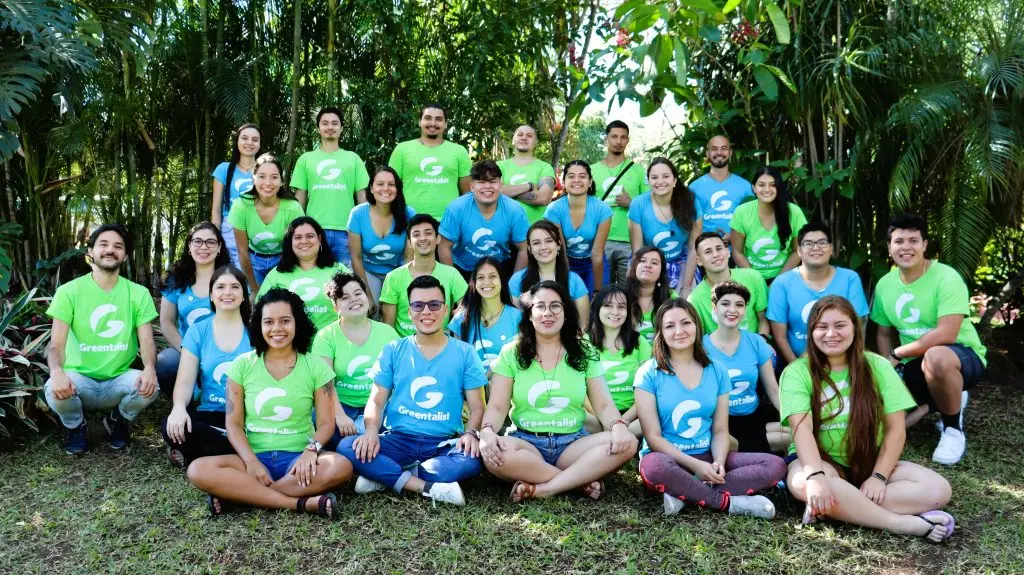
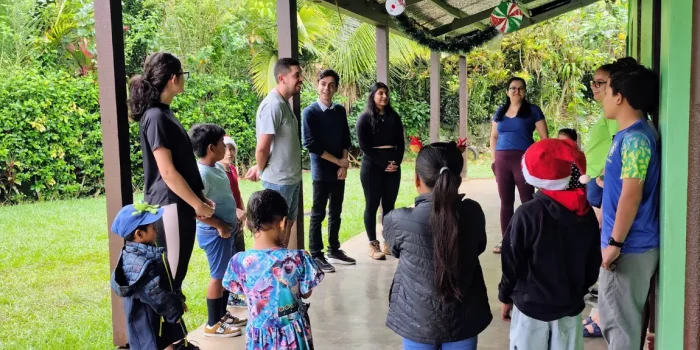
Environmental education session with local children — Costa Rica.The people who join us are between 18 and 24 years old. Some come from environmental backgrounds, others don't and honestly, that doesn't matter as much as people think. What I look for is something harder to teach: a genuine willingness to show up, to do the work, and to let the experience change them. That's the foundation everything else is built on.
We run two tracks. International volunteers join from abroad for the full journey 10 to 12 weeks from start to finish. Local volunteers from Costa Rica participate in shorter, focused project phases. Both tracks share the same philosophy: real work, real learning, real impact.
The Full Structure
How I designed the journey
One of the things I'm most proud of is that this program doesn't start when you land in Costa Rica and it doesn't end when you leave. I designed it as a four-phase journey, because I believe that real transformation needs time, context, and intentional progression. Here's how it works.
Virtual Training
It starts online, four weeks before you arrive. I wanted volunteers to hit the ground running not spending their first week trying to understand the basics. Through a series of webinars and learning modules, I walk you through Costa Rica's ecosystems, the ethics of community work, field safety, and what real environmental leadership looks like. By the time you land, you already know your teammates and understand what you're walking into.
In-Country Induction
Your first week in Costa Rica is intentionally slow. I know that might sound counterintuitive, but I've learned that volunteers who take time to understand the why before the how are more effective, more resilient, and more respectful throughout the program. We visit the sites, meet the communities, build the team and then we get to work.
Community Project
This is the heart of what we do. Weeks of real, physical fieldwork in rural Costa Rican communities building infrastructure that lasts, alongside the people who will use it every day. It's demanding work. It's also, from what I've seen, some of the most meaningful work these volunteers have ever done.
The Trek
I designed The Trek as a closing experience that brings everything together. An expedition through Bribri and Cabécar indigenous territories in the Talamanca mountains hiking, environmental education with local children, cultural exchange, and a final reflection. Every volunteer I've spoken to describes it as the moment the whole program clicked.
Phase 1 · Virtual Training
Why I start the program before you arrive
I've seen what happens when volunteers arrive without context. They spend the first week processing things they could have understood beforehand and that costs everyone time. So I decided to flip the model: the program begins online, four weeks before you land in Costa Rica.
I built the training around four areas that I believe are non-negotiable. The first is Environmental Leadership I want you to understand Costa Rica's ecosystems and the broader climate context before you ever set foot in a community. The second is Community & Development how to work alongside people who have their own knowledge, their own priorities, and their own relationship with the land. Showing up with humility isn't a soft skill. It's the most important thing I can teach.
"Showing up with humility isn't a soft skill. It's the most important thing I can teach."
The third module covers Project Skills & Field Safety practical preparation for tropical fieldwork, from tool handling and risk awareness to first aid and team communication. And the fourth, Sustainability & Impact, is really about legacy. I ask every volunteer to think about what they'll do with this experience when they go home. Not as an abstract idea, but as a concrete intention.
I've found that volunteers who go through this training are more effective, more resilient, and more culturally respectful from the moment they arrive. The virtual program isn't a formality it's the foundation the rest of the experience is built on.
- You'll already know your teammates cohorts go through the webinars together.
- You'll understand the context and goals of the project you're joining.
- You'll be mentally and practically ready to lead from day one.
Phases 3 & 4 · In the Field
Where I've seen people surprise themselves
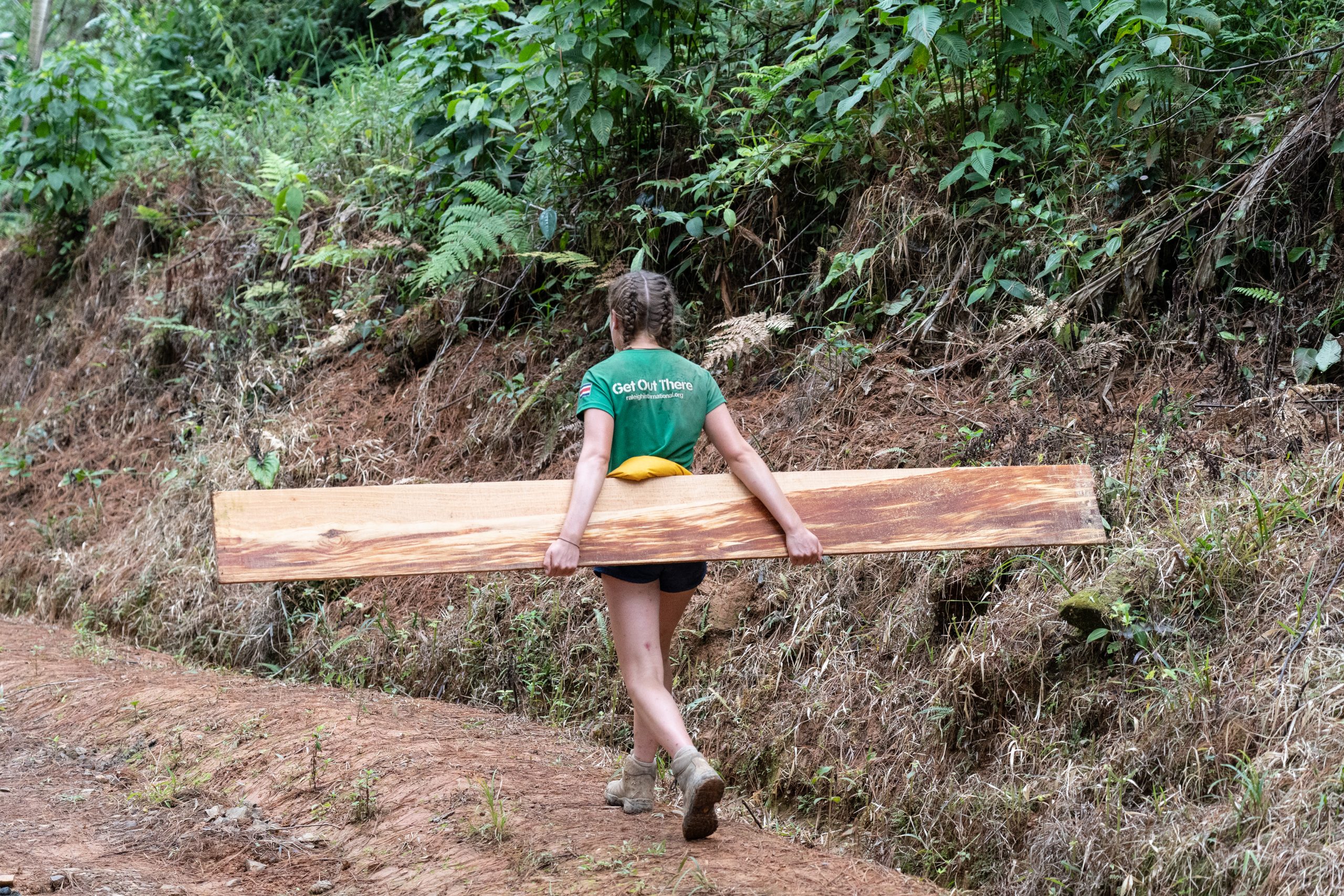
Phase 3 · Community ProjectAfter induction week, we move into the part of the program I'm most proud of: the community project. Right now, that means Water for Life a water catchment and distribution system we're building alongside rural communities on Costa Rica's Caribbean coast. This isn't a symbolic project. It's infrastructure that these communities will depend on.
Water for Life project — Caribbean coast, Costa Rica.Monday through Friday, volunteers are in the field for six to eight hours. It's physical work in a tropical climate and I don't soften that. I tell every volunteer upfront: this will be hard, and that's exactly the point. The evenings are for debriefs, workshops, and reflection. Weekends are yours. And through all of it, accommodation and full meals are covered.
"I've watched people discover a capacity in themselves they didn't know existed. That's not something I can teach. It's something the work draws out."
Phase 4 · The Trek
I designed The Trek as the closing chapter and it has become the part of the program that people talk about most. For six to eight days, we move through Bribri and Cabécar indigenous territories in the Talamanca mountains. We hike. We run environmental education workshops with children in indigenous schools. We share meals and stories with community members who have lived on this land for generations.
Environmental action during The TrekThere's a reflection ceremony at the end that I look forward to every time. Not because it's ceremonial but because of what comes out in that room. People talk about what they came expecting, and what they actually found. Those two things are almost never the same. And that gap, I think, is where the real growth lives.
Is This Program For You?
I'm not looking for the perfect candidate
When I think about who belongs in this program, I don't reach for a checklist. I think about a specific feeling that restlessness that comes from wanting to do something real and not quite knowing where to start. If you've felt that, I built this for you.
You need to be between 18 and 24. You need to be physically ready for outdoor work in heat and humidity. You need to be genuinely open to discomfort, to perspectives different from your own, to the possibility that the communities you'll work with have as much to teach you as you have to offer them. And you need to be committed to the full program. This isn't something you can do halfway.
"I don't need you to be perfect. I need you to be present, honest, and willing to be changed by this."
I've watched volunteers come through this program and leave as different people not in a vague, hard to explain way, but visibly. They know how to lead. They know how to listen. They understand that environmental work happens at the intersection of ecology, community, and trust and they've built all three. That's what I'm trying to give you. If any part of this resonates, I'd love to hear from you.
Osman Olivas
Operations Manager
If something here resonates, apply
Fill out a short interest form and we'll schedule a discovery call. No pressure just an honest conversation about whether this is the right fit.